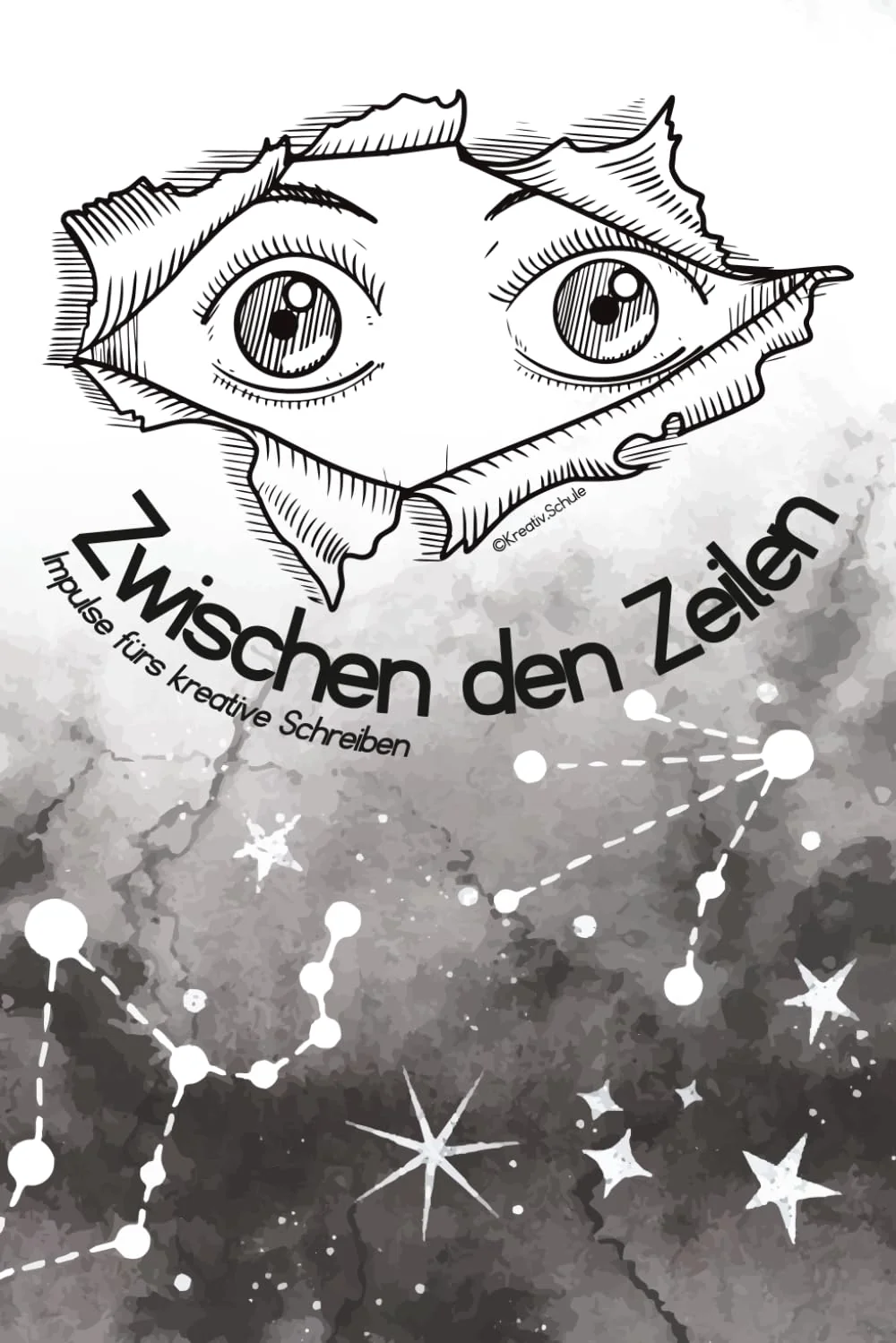
Materials · Creative Writing
Between the Lines
Prompts for Creative Writing
A writing prompt is an invitation. Not an assignment, not a topic to be worked through — but an image, a sentence, a question that makes a start possible. Anyone who has once seen how a single prompt sets an entire class writing understands why creative writing is so much more than essay practice.
What a prompt does
Creative writing does not begin with the right answer but with an open question. A good prompt opens space: it gives direction without prescribing the path. Children — and adults — write not despite the constraint but because of it. The prompt carries them past the hardest part: the beginning.
It does not matter whether someone "writes well". A prompt does not ask for perfection. It asks for willingness: who is coming?
Writing as practice, not product
The aim of creative writing is not the finished text — it is the writing itself. The practice. The acclimatisation to the feeling of choosing words, forming sentences, saying something that has not been said before. Regular writing does not only develop language competence. It develops a relationship with one's own voice.
"Between the Lines" accompanies this process. It gathers prompts, methods, and reflections — not step-by-step instructions, but ideas that make the next writing session a little easier.
Prompts in the classroom
Writing prompts are flexible: as a brief opening to a lesson, as a calm close, as a standing ritual in free writing time. What matters less is the format and more the attitude: texts that emerge from prompts are not immediately evaluated. They are simply allowed to exist first.
This lowers the threshold — especially for children who are afraid of getting something "wrong". Creative writing as a space without mistakes is often the first step towards genuine pleasure in writing.
What the book contains
"Between the Lines: Prompts for Creative Writing" offers:
- Prompts for different age groups and writing occasions
- Reflections on the nature of creative writing
- Methods for the classroom and for private writing
- Thoughts on the relationship between reading and writing
- Short, self-contained chapters — to be read and re-read
The connection to the first book
"Write When You Can" was a beginning — a book that shows writing is possible for everyone. "Between the Lines" goes a step further. It asks what happens between the words. How meaning is made. What holds a text together.
Both books stand alone — but together they form a path.
Available on Amazon