Materials · Years 1–4
Small Window, Big Impact
Reading aids for children who lose their place on the page
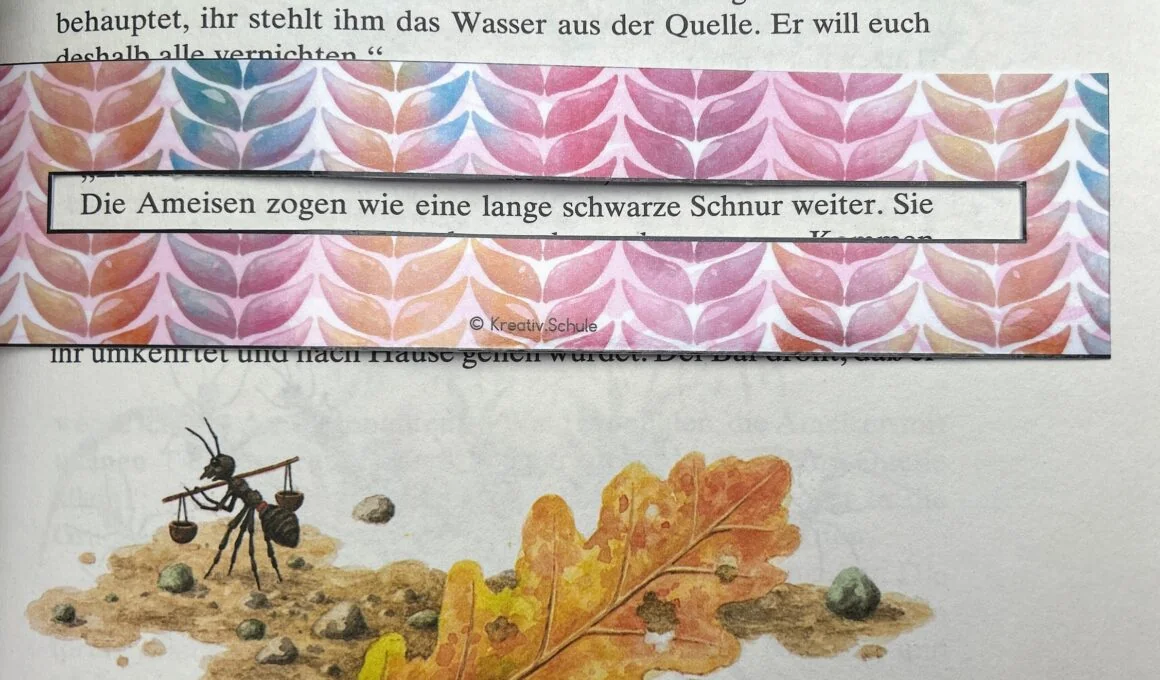
A narrow strip with a slot cut through the middle — that is the reading aid. Simple to make, powerful in effect. For children who lose their place when reading, who see too many words at once, or who are working with dyslexia, this small tool can make a real difference.
How the reading aid works
The strip is placed over the text: through the slot in the middle, the child sees exactly one line — everything else is masked. This significantly reduces visual overload. Children can focus on what is directly in front of them without being distracted by the surrounding lines. The strip is moved down line by line as they read.
Who is the reading aid particularly suited for?
- Children with reading difficulties or dyslexia
- Children who frequently lose their place or skip lines when reading
- Children with concentration difficulties
- All Year 1 children when starting to read longer texts
Important: the reading aid is not a sign of weakness — it is a tool, just like a ruler for writing in a straight line. When it is used as a matter of course in the classroom, it carries no stigma for anyone.
What the resource contains
The set includes a free single template for immediate printing, as well as a complete class set as a PDF. Both can be printed on ordinary paper and glued onto card, or laminated directly. The reading aids are available in various sizes to suit different line widths.
The free single template
Anyone who would like to try the reading aid first can download the single template free of charge — no registration required, no detours. Simply print, cut out, and use.
Related materials on Eduki