Mathematics · Years 1–4
Discovering the World of Numbers with the 99 Grid
Structure, enjoyment, and learning made easy
Mathematics is the language of logic, and the key to it lies in a secure understanding of number. For primary school children, the transition from first counting to calculating within the number range up to 99 is often a challenge. This is precisely where the 99 grid with number lines comes in. Through a clever combination of visual structure, interactive templates, and pedagogically considered exercises, this material helps children grasp number relationships, practise arithmetic operations, and develop genuine enjoyment of learning along the way.
Why the 99 grid and number lines?
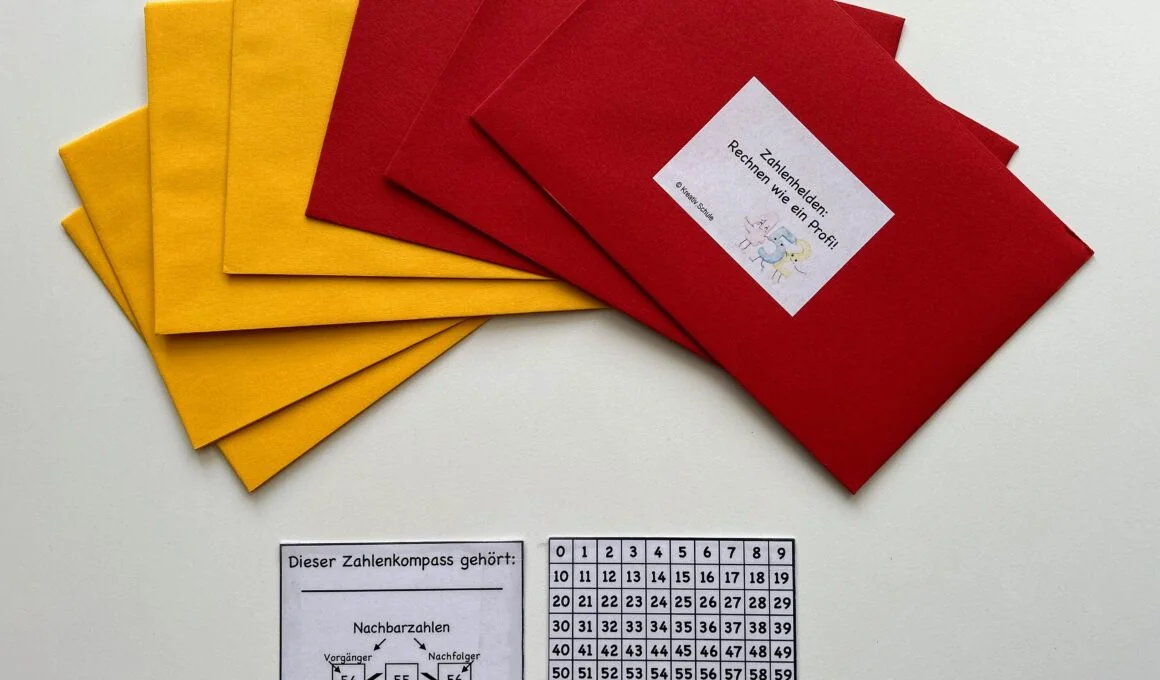
The foundation of any mathematical education is a secure understanding of the number range. The 99 grid displays the numbers from 0 to 99 in a clear table layout, allowing children to recognise not only the sequence of numbers but also important patterns such as neighbouring numbers, multiples, and the transition across the tens boundary. This is complemented by the reverse side, which makes predecessors and successors visible, as well as by number lines that bring addition and subtraction to life in a tangible way.
Highlights of the materials
- Playful structure: The clear arrangement of the 99 grid enables children to intuitively grasp number sequences and relationships.
- Interactive exercises: Templates can be used to highlight specific number ranges or to vary tasks.
- Versatile applications: Whether in regular classroom lessons, support sessions, or at home — the materials can be used flexibly in any setting.
- Differentiation made simple: Both children who need extra support and high-achieving learners benefit from the adaptable tasks.
Pedagogical benefits in detail
The materials are grounded in research-based principles of mathematics education and promote:
- Number sense: Children learn to navigate the number range with confidence, identify neighbouring numbers, and understand the place-value system.
- Automatisation of calculation steps: Repeated practice with number lines and the 99 grid strengthens mental arithmetic.
- Pattern recognition and strategic thinking: Odd and even numbers, multiples, and the distances between numbers become visible and comprehensible.
- Independence: The straightforward handling of the materials allows children to work on their own and experience the satisfaction of success.
Uses in everyday life
The 99 grid and the number lines are not designed solely for mathematics lessons. Parents can also use them to support their children at home:
- Homework support: Number lines help children follow and check addition and subtraction steps.
- Creative games: Templates and the grid can be used for guessing games and small maths challenges.
- Self-assessment: Children can independently check their own calculations.
Conclusion
The 99 grid with number lines is more than a learning resource — it is a key that opens up the world of mathematics for children. Through clear structure, playful exercises, and versatile applications, mathematics becomes an adventure that motivates and inspires children.
Related materials on Eduki