Teaching Methods · Mathematics
Why a Fan Rather Than a Times-Table Grid?
A pedagogical decision for genuine understanding
In classroom practice, times-table charts presented in compact grid form are widespread. They are considered space-saving, quick to deploy, and inexpensive to produce. In the commercial teaching materials market, these formats dominate — a single chart showing all multiplication sequences at a glance. Yet on closer inspection, it becomes clear that this form of presentation reflects the logic and convenience of adults rather than the learning needs of children.
The problem with the traditional times-table grid
The traditional times-table grid displays results in a matrix — usually without calculation signs, without clear separation of individual tasks, and without any discernible sequence. Learners must implicitly know what is expected of them and find their way around a number-heavy grid. What is missing is structure, active engagement, and clarity.
What the fan format does better
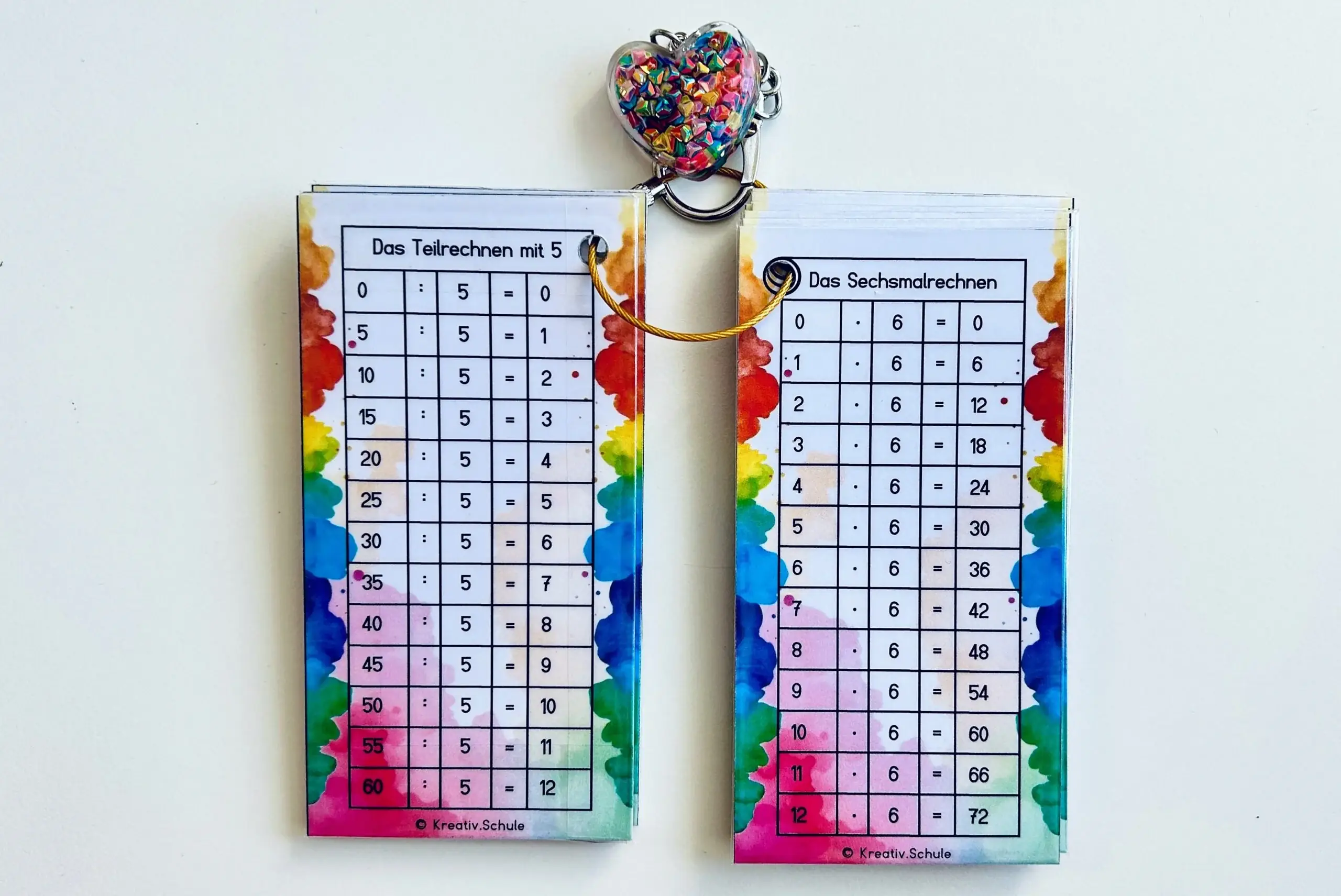
The fan format deliberately sets a different priority: the focus is not on a quick overview, but on the actual learning process. Each card in the fan contains a complete multiplication sequence — on the front, the multiplication; on the back, the corresponding division. Learners see not just results, but complete calculations with operation signs. This builds genuine understanding of the underlying operations.
There is also the element of active handling: in order to find or check a task, the relevant card must be deliberately selected or turned over. Rather than passively scanning a table, the learner physically leafs through the material — an action-oriented element that is known to strengthen memory and understanding.
A note for teachers
Another important aspect is the deliberate decision to begin each multiplication sequence with zero. Whereas many charts start with "1 times …", the fan cards begin with "0 times …". Making zero the starting point of mathematics visible helps children grasp arithmetic from the outset as a structured and complete activity.
The material covers all multiplication sequences up to twelve, not just up to ten. The multiplication fans can be laminated, bundled together, and used flexibly — individually, at learning stations, or as part of daily mental arithmetic practice. The double-sided structure enables self-assessment; the clear presentation of each task builds confidence.
Conclusion
The decision to use the fan format is not a stylistic coincidence — it is the result of a deliberate pedagogical priority: learning before logistics. Clarity before tidiness. Action before shortcuts. Those who want to foster genuine understanding should not reach for quick solutions, but for carefully considered materials that truly support learning.